Margin Notes

TRY THIS TOMORROW: WORDS WORKING TOGETHER

Mar
19

In last Thursday’s post, we explored how to use the New York Times’ What’s Going On in This Picture? to help students build sentences from the ground up. By starting with a “Who + Do” chart and expanding with details, students learn how to construct meaning.

But what happens when students encounter a complex sentence in their reading that they didn’t build themselves? To help them navigate this, teachers can turn to a routine from Nancy Lewis Hennessy’s The Reading Comprehension Blueprint.

While the previous routine focused on sentence construction, this script focuses on sentence deconstruction. It teaches students to ask specific questions to unlock the meaning of sentences they encounter in their texts.

The Routine: Words Working Together by Nancy Lewis Hennessy

Each word in a sentence has a job. Each is a building block of meaning. We have learned that words answer different questions about the sentence, such as who or what it is all about. Let’s review how these words can answer questions about the meaning of the sentence.

  1. Let’s read this sentence from your text: ________________
  2. Let’s find the words in the sentence that answer these questions (adapt questions to targeted sentence):
    • Which word(s) answers the question who or what? ________________
    • Which word(s) tells us what the who/what was doing? ________________
    • Which word(s) tell us about the who or what?
      • What kind? ________________
      • How many? ________________
      • Which one? ________________
    • Which words tell who did what (to whom)? ________________
    • Which words tell you
      • When? ________________
      • Where? ________________
      • How? ________________
  3. (Note: Partners each have a set of word cards and a structured organizer with questions.) These words all come from sentences in your text. Your job is to match the word with the question it answers. I will do one with you. The word ________________ answers the question ________________. Let’s try one together. The word ________________ answers the question ________________. It is your turn to match the rest of the word cards with the questions.
  4. Let’s check our work. Listen or look as we review the completed organizer. (Complete orally or on whiteboard.)

This routine is the perfect follow-up to the Who + Do image practice. In the image routine, students learn that adding “how, when, and where” details makes their writing more precise. In the Teacher Syntax Script, they learn that those same details are the keys to comprehending what an author has written.

By teaching students to identify how phrases and clauses contribute to meaning, we give them a “way in” to complex text. Instead of getting stuck on a difficult sentence, they can systematically break it down into its functional parts and rebuild the meaning for themselves.

Hennessy, Nancy Lewis. The Reading Comprehension Blueprint: Helping Students Make Meaning from Text. Brookes Publishing, 2021.

TRY THIS TOMORROW: USING THE NEW YORK TIMES “WHAT’S GOING ON IN THIS PICTURE?” FOR SYNTAX PRACTICE

Mar
12

The New York Times feature What’s Going On in This Picture? is a simple way to help students notice and apply syntax. This quick routine moves students from observation to sentence building, sentence expanding, and sentence combining. Each step is followed by class discussion and sharing opportunities.

Here’s a version using this NYTimes image.

Step 1: Observe and Build a Who + Do Chart

Ask students to study the image silently first.

Give students a two-column organizer labeled:

  • Who (subject)
  • Do (verb/action)
WHO DO
child in animal ears lies across chairs
child in bird costume sits upright
boy next to him looks to the side
girl in front row looks down
children wear costumes

Step 2: Write Kernel Sentences

Students turn each row into a short, direct sentence.

  • The child lies across the chairs.
  • The child sits upright.
  • The boy looks to the side.
  • The girl looks down.
  • The children wear costumes.

Step 3: Expand with Adjectives and Adverbs

Now students add detail.

Ask: Which one? What kind? How many? How? When? Where?

  • The tired child lies across the metal chairs.
  • The serious child sits upright in a dark costume.
  • The curious boy looks to the side quietly.
  • The young girl looks down at her hands.
  • Several children wear colorful costumes.

Step 4: Combine Sentences

Students now combine related ideas using conjunctions or clauses. Offer combining stems: while, as, because, when, who is/who are

  • The tired child lies across the chairs while the serious child sits upright beside him.
  • Several children wear costumes as they sit in rows of chairs.
  • The boy looks to the side while the girl looks down at her hands.

 Step 5: Create

Have students return to a paragraph they are currently drafting and revise two short sentences by expanding or combining them using today’s syntax moves.

Reading Transfer

When students build sentences themselves, they understand how meaning is constructed. Later, when they hit a long or complex sentence in a text, they have a way in. They can ask:

  • Who is this about?
  • What are they doing?
  • When, where, why, how?

Instead of getting stuck, they break the sentence apart and rebuild the meaning, just like they practiced with the image.

Writing Transfer

  • Writing complete subject–verb sentences
  • Adding precise detail
  • Combining ideas into more fluent sentences
  • Varying sentence structure intentionally

This lesson was inspired by William Van Cleave’s Syntax Matters: The Link Between Sentence Writing & Sentence Comprehending

BOOK RECOMMENDATION: THE TROUBLE WITH HEROES BY KATE MESSNER

Feb
24

“Climbing isn’t about
reaching the top.
It’s about pushing past limits
of what you thought you could do.
If you never fall, never fail, you’re not growing,
you know?”

In The Trouble With Heroes, readers meet Finn Connelly, a thirteen-year-old still dealing with his father’s death and the anger that has built up around it. After falling behind on schoolwork and knocking over the gravestone of a well-known local climber, Finn is given an unusual option: spend the summer climbing all 46 Adirondack High Peaks with the climber’s dog instead of facing prosecution.

What starts as a punishment becomes a routine that pushes him to face his grief, his frustration, and the silence he’s been carrying. The climbs, the poetry assignments he owes, and the steady support of the people around him help him take small steps toward understanding himself again.

The book addresses serious topics including parental loss, 9/11, alcoholism, and PTSD, but it handles them with clarity and care. Finn starts the story shut down and angry, and the hikes give him a structure he cannot avoid. He calls the adults who join him “babysitters,” but each person has a connection to his father or to the woman whose grave he knocked over. They walk beside him, offer steady presence, and give him room to feel what he has been pushing away. Over time, readers see him shift from resistance to small moments of honesty, then to reflection, and finally to the early stages of healing. Each character helps him take one more step forward, both on the trail and within himself.

This is a great recommendation, particularly in classrooms where students are exploring grief, identity, accountability, or resilience. The accessible verse style makes it engaging for a wide range of readers. It lends itself well to ELA or social-emotional learning discussions about how communities support healing and what it means to redefine heroism in personal terms. Grab a tissue before you begin but, important spoiler, the dog survives the entire book!

TRY THIS TOMORROW: CELEBRATING MICRO-OCCASIONS

Jan
22

What I was reading:

This post is inspired by the NYTimes Learning Network student opinion piece titled What Little Victory Would You Like to Celebrate? bThe article argues that people should celebrate small, everyday accomplishments instead of only major milestones like birthdays or holidays. She explains this idea by sharing examples of “micro-occasions,” such as getting a new haircut or being pain-free, and suggests that recognizing these moments can make life feel more joyful and meaningful. Overall, the article encourages readers to rethink what is worth celebrating and to notice the good things that often get overlooked.

This text made me think of the TikTok trend of buying cake to celebrate the typically unrecognized accomplishments of friends. An example of this trend can be found here, here and here. This one is an example of a class doing the trend. The common theme among the videos is the worthy celebration of the simple accomplishments like surviving finals, drinking water daily or not hitting snooze.

How to try this tomorrow:

1.Quickwrite:

Quickwrites are a flexible way of inviting student thinking, building confidence, and preparing students for deeper reading, writing, and discussion. You can read more about them on our blog series here.

Choose one of the TikTok small wins videos from the examples linked above that best suits your students and view it together. Offer invitations to respond such as:

  • Write anything that comes to mind after viewing the text.
  • Write about the small wins you have had this year that may not typically be celebrated.
  • Write about whether you agree with the trend of celebrating all success, no matter the size.
  • Write about the wins from the video. Which one was most impressive?

Offer the opportunity to share thinking by summarizing, reading directly from the page, commenting on another perspective or listening.

Pre-Reading:

2. Background Knowledge: Cultural Celebrations vs. Personal Victories

Create a quick T-chart on the board:

Cultural Celebrations Personal Victories
birthdays finishing a project
holidays trying something new
graduations getting through a hard week

Complete the chart together to notice the difference between cultural celebrations and personal victories. The discussion along with the quickwrite and vocabulary, will prepare students for this distinction in the article.

Discuss:

  • Who decides when cultural celebrations happen?
  • Who decides when personal victories matter?
  • Which type happens more often in real life?

3. Vocabulary/Morphology

Look for tier 2 words to teach vocabulary needed for comprehension and opportunities for morphology.

In this article you may choose words like milestone, revelry, confine, micro-occasion or other words best suited for the students in front of you.

NYTimes – Little Victories – Vocabulary – Click the link to see models of vocabulary and morphology routines for these words.

4. Reading Task:

Introduce the 3-2-1 response. This is a flexible thinking tool that can be repeated with different texts and for different purposes. It might focus on comprehension, reflection, argument etc. The numbers stay the same, but the questions can change depending on the text and learning.

The goal of a 3–2–1 is to provide focus and to make that thinking visible.

3-2-1 Learning Reflection – here is an example of what the template could look like.

Read the text.

After reading, students complete the 3-2-1:

  • 3 key details the author wants you to know from the quickwrite or article
  • 2 micro-occasions you hope to celebrate
  • 1 milestone you are looking forward to

 5. Debrief:

  • Invite students to share a micro-occasion they have experienced or hope to experience this year.
  • Is celebrating small victories meaningful or unnecessary?
  • How can schools celebrate the small wins? What does this look like?

This lesson sets the tone for a new semester by modeling a routine of quickwrites, word study, mini-lessons, independent work and debriefing while focusing on positive celebrations and intentions. Try this tomorrow to start the semester with joy.

HAPPY HOLIDAYS FROM MARGIN NOTES

Dec
18

As we near the end of 2025, we want to celebrate the work of literacy teachers and the steady, thoughtful ways you support readers and writers every day. The spaces you create for students to wonder, take risks, and find their voices help them grow in ways that last far beyond a semester.

As we head into the Winter break, we hope you find rest, quiet moments, and time with the people you love.

Here is a poem that has felt right for this time in the year.

Enough by David Whyte

Enough. These few words are enough.
If not these words, this breath.
If not this breath, this sitting here.

This opening to life
we have refused
again and again
until now.

Until now.

Wishing you a peaceful holiday and a bright start to 2026,
Jill, Christie, and Melissa

UNSTUCK BY BARBARA DEE

Dec
16

Barbara Dee’s Unstuck follows seventh grader Lyla, a writer facing serious writer’s block as a story she cares about refuses to come together before a contest deadline. Her struggles with creativity run parallel to challenges with friendships and family. Lyla deals with a changing friendship after her best friend moves to a new school, a sister in conflict with their parents, and Lyla’s own pressure to succeed. The book highlights themes of identity, resilience, and releasing expectations to become your own self.
Lyla’s first-person narration captures the anxious energy of middle school but balances it with self-awareness and humor. Her fictional fantasy writing mirrors her real-life conflicts in a way that shows the messy process of finding your voice and the slow realization of this struggle. Conflicts aren’t solved neatly, which makes the plot more realistic and gives readers space to reflect.

This book is a great recommendation for middle grade readers who enjoy realistic fiction. It will connect especially well with students who like to write, who struggle with perfectionism, or who are navigating shifting friendships.


TRY THIS TOMORROW: CONNOTATION IN CONTEXT

Nov
20

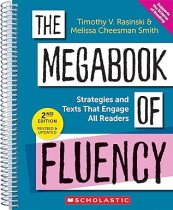
The revised and updated second edition of The Megabook of Fluency: Strategies and Texts That Engage All Readers by Timothy V. Rasinski and Melissa Cheesman Smith shares a fun strategy for emphasizing word meaning in their chapter on Teaching Expressive Fluency: It’s All in How You Say It! –an activity called Connotation in Context. This fun lesson helps students deepen their understanding of the undertones in words. Choose 6–8 words with clear positive or negative connotations and have students decide the connotation of each. Then, ask them to write a sentence that uses the word in a way that makes the connotation clear through context. Model how the same word can take on different tones depending on its use. She’s ambitious can sound admirable or critical depending on context and delivery. Students then read their sentences aloud, using tone and expression to match the connotation. If you have a copy of the book, use the Positive or Negative Connotations in Context printables that scaffold the activity.

Before diving into this lesson, explore the word connotation and preteach its morphology (con- meaning “with” and notare meaning “to mark”) as well as use sentences from a collection of mentor texts to show how writers choose words for nuance and subtle meaning. Students use connotations every day, often without realizing it. Invite students to discuss and think about words they use with different connotations (like “lit,” “goat,” or “sus”) to spark discussion of how language shapes social interactions. Have students make a list of words they often use that could have different connotations depending on context and discuss how those words change in meaning based on the situation. For more fluency-building ideas that also connect to craft like this strategy, check out The Megabook of Fluency 2nd Edition.


TRY THIS TOMORROW: THERMOMETER CHECKS

Nov
13

This idea comes from the resource 100% Engagement: 33 Lessons to Promote Participation, Beat Boredom, and Deepen Learning in the ELA Classroom by Brian Sztabnik and Susan Barber. The goal is to spark authentic engagement, thoughtful discussion, and meaningful collaboration that deepen students’ reading, writing, and thinking skills.

Thermometer Checks, inspired by Tim Averill, invites students to track a character’s emotional state over time by literally plotting a temperature check graph. This allows students to visualize character development and connect textual evidence to these shifts.

Here are some images of what that might look like:


Here is how it works:

  • Set up the axes: The x-axis moves chronologically through the story or section; the y-axis represents the character’s mental health or emotional well-being.
  • Gather evidence: As students read in groups, they collect textual evidence (on sticky notes, annotations, or a shared document) highlighting key moments that reveal the character’s mindset.
  • Plot and justify: Students plot data points showing where they think the character “is” emotionally at various moments. Each point must be supported with a direct quote or paraphrased textual evidence.
  • Analyze and discuss: Once the graph is complete, students step back to interpret patterns. Where do emotions spike or drop? What causes these shifts? How do they shape the character’s motivations, choices, or relationships?

The goal is to have students increase awareness of how characters change and grow while using inferring skills to see the subtleties that are not stated outright. The lesson ends with a description of the engagement and says this:

This lesson engages students because they visually notice that the progression isn’t so direct. Characters, like us, fluctuate all the time. They respond and react to the events of life in positive and negative ways. It is a great way to get every student to see characters beyond their superficial facades and allow them to plunge into the depths of those characters’ complexity.

TRY THIS TOMORROW: GUEST WRITER DEBBIE GRILLO ON READING WITH ELEVENREADER

Oct
16

Giving students access to text in multiple formats helps them become more confident, independent readers. Whether they struggle with decoding, love listening, or simply want to get through more books, audio can open doors. That’s where ElevenReader comes in – a new tool that turns text into natural-sounding audio in seconds. 

What is ElevenReader? 

ElevenReader is a free app powered by AI that turns digital texts – like PDFs, WORD documents, and ePubs(eBook file format) – into audio using realistic voices in over 30 languages. It’s easy to use, supports student choice, and works great for reading on the go or reinforcing comprehension through listening. 

Why Audio Access Matters 

Listening to text helps build fluency, supports comprehension, and gives students more ways to connect with content. For some, it removes barriers. For others, it’s a way to deepen their engagement and hear how language flows. ElevenReader helps make text accessible, personalized, and portable. 

How to Try This Tomorrow 

  1. Choose a Text Together
    Pick a short article, story, or excerpt your students can access digitally.
    Ask: How might hearing this text help you understand it better? 
  1. Use the App
    Download the ElevenReader app (iOS or Android).
    Upload or paste your text—then hit play! Let students adjust voice, speed, or language. 
  1. Reflect on the Experience
    Have students respond to what they noticed while listening.
    Ask: What was easier? What felt different? What kind of texts would you want to hear next? 

Audio can give students a fresh way into reading—and help them feel successful with texts they might otherwise avoid. Try it tomorrow. You just might change how someone sees themselves as a reader. 

Debbie is a high school literacy teacher who believes all students should have access to great books. When she creates a moment of free time, you will find her cuddled up in her recliner with a book, a cup of coffee and her dog.

WELCOME TO THE 2025-26 SCHOOL YEAR

Aug
28

We hope you had a restful summer and found time to recharge. The new school year brings with it a possibility with new students, new stories, and a chance to build communities where reading and writing are at the heart of our classrooms.

One of the best ways to set that tone is by starting with reading and writing on day one. While it’s tempting to spend the first days on routines and introductions, inviting students into meaningful literacy work right away sends a clear message that their voices and ideas matter most. Beginning with reading and writing helps students see themselves as part of a community of thinkers from the very start.

To support this work, we’ve gathered quickwrite texts and invitations to respond, organized by grade level. These short, engaging text are designed to spark thinking, writing, conversation, and connection on the very first day.

(You may need to open links using Microsoft Edge)

Grade 6 – Middle School Fears and Faves and The 6th Grade Nickname Game+ THE SIXTH GRADE NICKNAME GAME – EXCERPT

Grade 7 & 8 – THE SIXTH GRADE NICKNAME GAME – EXCERPT and Top Six And A Half Quickwrite + Top Six And A Half – How To Survive Middle School Excerpt

Grade 9 -12 – Quickwrite – FIRST DAY FLY BY JASON REYNOLDS and Quickwrite – First Impressions + Quickwrite Text – First Impressions

Here’s to another year of reading, writing, and learning together,

The ASDW Literacy Team