Margin Notes

MORE THAN WORDS BY JOHN WARNER

Sep
30

John Warner introduces More Than Words: How to Think About Writing in the Age of AI with an anecdote about reading an article about how ChatGPT means the death of High School English class. His immediate response was, “Lord, I hope so.” He explains that “…for over a decade, I’ve been trying to kill the high school essay that ChatGPT so effortlessly generates.” If you have read Warner’s previous book, Why They can’t Write: Killing the Five-Paragraph Essay and Other Necessities, you know he is a tireless advocate for creating the conditions for engaging students in meaningful and authentic writing instead of producing “writing-related simulations, formulaic responses for the purpose of passing standardized assessments.”

Warner sees AI entering the writing classroom as an opportunity, not a threat:

Rather than seeing ChatGPT as a threat that will destroy things of value, we should be viewing it as an opportunity to reconsider exactly what we value and why we value those things. No one was stunned by the interpretive insights of ChatGPT-produced text because there were none. People were freaking out over B-level (or worse) student work because the bar we’ve been using to judge student writing is attached to the wrong values.

Before moving into an exploration of AI in the writing classroom, Warner reflects on the qualities of generative AI that readers will need think critically about as they navigate the topic. Generative AI:

  • is founded on the unauthorized use of intellectual property
  • is built on a foundation of exploited labor
  • is very, very bad for the environment
  • will permanently enshrine existing structural biases
  • could end the world due to the outsourcing of human judgement to algorithmic reasoning

In Warner’s opinion, writing is a “fully embodied experience’ that requires the writer to think and feel, bringing their unique intelligences to the writing and attempting to demonstrate them to their audience. ChatGPT is the opposite—an averaging of intelligence that results in pattern-driven text. Warner reminds us that writing is:

  • thinking
  • feeling
  • a practice
  • impacted by our reading

He views the first step in confronting what ChatGPT means for the kind of writing and reading students should be doing in school, is ascertaining what is meaningful and valuable about what we are asking them to do as readers and writers. According to Warner, ChatGPT isn’t threatening anything meaningful because it isn’t capable of producing output that conveys meaning; he points out to readers that we should always be mindful that Chat GPT is actually driven by automation and not artificial intelligence.

There are three principles that can guide educators in thinking about how to make ChatGPT irrelevant in the work we are asking readers to do, thus making outsourcing it less attractive.

Fostering engagement through appreciation.

“…writing that values the process, and the practice-building aspects of these activities, rather than reducing them to limited proficiencies that fit on a standardized test, provides an experience which helps raise student self-knowledge and self-efficacy when it comes to writing.”


Building rigor through authentic challenge.

“By framing [writing] experiences as problem-solving rather than students thinking about writing to ‘standards’ that are largely abstract, they must engage with the specific needs of the audience and the demands of the occasion. They are learning that every piece of writing is a custom job rather than something written to a template for a grade, and that no two writers will produce the same piece, even if they are writing from similar material, like writing reviews of the same movie.”

Making learning visible through reflection.

“We’re looking to understand what’s been learned so that students can take ownership of and then build on that learning from experience to experience. For that reflection, during the experience, I ask students to consider the following:

  • What have you discovered that is new to you?
  • What line, idea, or concept occurred to you while you were writing that you hadn’t planned on?
  • What are you confident in? What are you confused by?

After the experience is complete and students have received feedback and commentary from me, I ask them to reflect on some additional questions:

  • What do you know now that you didn’t know before? (This is a question of both knowledge of subject matter and the writing process.)
  • What did you do in completing this experience that you’re going to do again in the future?
  • What did you do in completing this experience that you think would be a bad idea to repeat?”

In the book’s final section, Warner offers a framework for thinking about AI:

Resist

  1. Resist anthropomorphizing generative AI: “To the extent that technology is intelligent, it is not the intelligence of humans.”
  2. Resist giving into technological determinism: “While technologies have a profound effect on our lives and may seem to exert a kind of deterministic pressure, we should not give into the notion that whatever is coming is inevitable and we are powerless to resist future developments, either collectively or individually.”
  3. Resist turning over inherently human activities to AI: “If ChatGPT can do it, it’s probably not worth doing by human, and it very well may not be worth doing at all.”
  4. Resist allowing our labour to be degraded or destroyed: “Some AI-driven disruption of labor is inevitable. It’s already happening. As both laborers and consumers of the labor of others, when confronted with an AI-produced work, we should ask ourselves how we would feel if all that category of work were done by AI. AI writing tutors are pitched as a way for teachers to save time, but how would we feel if all writing feedback in school came via AI?”
  5. Resist the economic style of reasoning: “The economic style of reasoning involves identifying desirable outcomes as measured according to economic values, such as speed and efficiency…But efficiency is not a neutral measurement we necessarily associate with human well-being. We don’t apply efficiency as a measurement of our relationships or our favorite hobbies. An efficient vacation is not necessarily a good vacation. Good writing is not judged by the speed with which it is produced. Learning is not better when it happens more quickly.”

Renew

  1. Creatures, not machines: “Creatures are distinguished from machines by our dependence on the natural world and interdependence on one another. Creatures exist in an ecosystem that involves both competition and cooperation, but ultimately, a successful ecosystem runs on a sustainable framework in which each creature receives what they need to go about their own brand of creature-ness.”
  2. Individuals are not averages: “One of the ideas we must renew is that we are not the sum of our averages. When we reduce individuals to averages and then constrain their behaviors based on those averages, we are restricting freedoms. Generative AI content is, by definition, a great averaging of what’s in the world. An embrace of this output is a kind of capitulation to the machine, rather than staying true to our nature as creatures.”
  3. You’ve gotta have taste: “…charting the rise of algorithmic recommendations and how recommendation engines now dominate in terms of the media and content we are exposed to on a daily (or, really, minute-by-minute) basis…the first step to moving beyond Filterworld is to start to recognize when and how we are being steered by the algorithms. The next is to do the work of identifying and understanding and owning your own taste.”
  4. Shrinking the circle: “Renewing our sense of community independent of the looming presence of the algorithm is a way to give ourselves some ground to stand on as we evaluate the usefulness of the technology to the experiences of our lives.”
  5. Taste, specialize, experience: “In my view, the goal is to create ourselves as individuals through personal discernment. To practice our taste and express our values. We bring these individual selves into communities of other individuals who have their own unique world views. Here, then is an ecosystem of interdependent individuals, a collection of intelligences existing without being flattened into an algorithm.”

Explore

  1. Embrace generative AI as a public issue: “Think of artificial intelligence as a new form of public infrastructure that requites broad discussion and regulation to ensure safe and equal access to whatever it has to offer. Obviously, this means legislative bodies at both the state and federal level should be taking up the issue, but it is also a matter of recognizing the importance of acting through the lens of a shared public problem closer to home.”
  2. Find your guides: “Our communities inevitably must contain both those with whom we agree and those with whom we differ. As long as they are willing to see themselves as a member of the community with the well-being of the community in mind, they should be welcome.”
 

TRY THIS TOMORROW: QUICKWRITES TO SUPPORT VOCABULARY

Sep
25

Part of a Series on Using Quickwrites in the 6-12 Literacy Classroom

When intentionally designed, quickwrites give students the opportunity to interact with vocabulary in authentic and meaningful ways. Instead of isolated word lists or memorization, students engage with language in context, deepening their understanding and making new words their own.

Quickwrites support vocabulary by:​

  • ​Directly teaching the meaning and pronunciation of words tied to current reading or content
  • Providing authentic opportunities to use vocabulary in context, helping students transfer words into their own reading and writing
  • Modeling and reinforcing word-learning strategies, including context clues, word parts, and pronunciation patterns
  • Embedding instruction on morphology (prefixes, roots, suffixes) within meaningful reading and writing experiences

In Practice:

Let’s look at an example.

You are going to be engaging with the NYTimes Article on preparing for a big moment. This piece relies on an understanding of the word ritual. This might be a word students have heard before but may not have fully grasped. The excerpt for the quickwrite could be:

How Do You Prepare for a Big Moment?

The big moment is here: You’re about to step onto the mat for a winner-take-all gymnastics competition, face a daunting math test, walk onstage for your big audition for the school talent show, sit down for a nerve-racking job interview or present your work before a panel of judges at a science fair.

How do you warm up for this moment? Do you have any rituals — doing breathing exercises, eating a snack, listening to music or reciting affirmations — to calm your nerves, conquer your fears and psych yourself up?

How about blowing bubbles, tucking a good-luck charm near your heart or tying a tie just right?

Sample Invitations to Respond:

  • Write about whatever comes to mind after reading the text.
  • Write about a ritual you have before something important. What do you do? Why do you think it helps?
  • Write about one of the rituals from the text. When you could imagine this ritual being helpful and why?
  • Describe someone else’s ritual you’ve observed. How does it help them prepare?

This quickwrite supports the introduction of vocabulary by:

  • Repeated exposure to the word “ritual”.
  • Context clue discussion of the author providing several examples of different rituals to spark understanding.
  • Opportunity for peer discussion to transfer the word “rituals” to multiple contexts.
  • Invitations to respond that offer opportunities for students to use the word “rituals” in their own writing.

Vocabulary learning sticks when students see, hear, say, and write new words in meaningful ways. Quickwrites offer a simple yet effective routine to build that depth of understanding.

TRY THIS TOMORROW: QUICKWRITES TO STUDY CRAFT

Sep
18

Part of a Series on Using Quickwrites in Grades 6–12 Literacy Classrooms

Quickwrites are a powerful way to support students in reading like writers. When paired with a shared text that models a writing technique, quickwrites create opportunities for students to notice, name, and try out craft moves in their own writing.

How Quickwrites Support Craft Study

When intentionally designed, quickwrites can help students:

  • Recognize and analyze writing techniques in context
  • Build autonomy as writers who make purposeful choices
  • Develop voice through low-stakes experimentation
  • Experience a variety of writing styles through mentor texts
  • Feel more invested in techniques they notice themselves
  • Build confidence in identifying and using craft moves in their own work

In Practice:

Lesson Context: You are teaching a unit focused on the craft of description where students have the choice of form, audience and purpose. You want to show them how different authors use description.​

​This quickwrite will:​

  • Support gathering ideas about moments that matter​
  • Show text features that enhance author’s voice​
  • Provide an example of including internal dialogue into writing​
  • Provide an example of including personal feelings in exploding a moment​
Underrated by Steph Currie

Steph Currie has just lost a game. He writes: ​

I remember getting back to our hotel room — I think it was a Holiday Inn Express? — and just sulking. Like, I wasn’t being a hothead. I wasn’t mad at losing. I was just. . . down. I was in my turtle shell. I was feeling…well, I guess I was feeling how we’re really all taught to feel by these big tournaments, and this cutthroat basketball culture: like we’re walking down some do-or-die path. My dad took that path, and he made it to the league. And his son? His son couldn’t even make a mark against some other 13-year-olds. ​

So like I said, I wasn’t heated. I was more just, like — Oh, O.K. That’s it? I’m not good enough? This is…. over? ​

For me, in that moment, it pretty much WAS over.

Invitations to respond:

  • Write about anything that comes to mind after reading the text
  • Reflect on a time when you experienced a similar feeling of disappointment or inadequacy. How did you handle it? Did it motivate you to work harder or did it discourage you?​
  • Currie compares himself to his father. Write about a time when you compared yourself to someone else.
  • Write about a time when you felt pressure to succeed. Who/What was the pressure? How did it turn out?​

Connecting the Quickwrite to Craft Study

The context of your mini-lesson is exploding a moment with emotion and description. After students write their responses, revisit the mentor text together, not just for meaning, but for craft.

Why this works:

  • Students have already read the text for understanding
  • A second read offers a new lens to analyze technique
  • Re-reading builds fluency and accuracy
  • Through writing, students may uncover new ideas for their own pieces
  • Invitations offer immediate opportunities to try the technique

​Mini-Lesson: Exploding a Moment with Feeling

After the quickwrite:

  1. Explain the focus: how authors use detail and internal dialogue to expand an emotional moment.
  2. Revisit Curry’s passage with this lens.
  3. Ask:
    • What do you notice about the way this is written?
    • What’s the effect on the reader?
    • How might you use a similar technique in your writing?

Craft Moves You Might Highlight:

  • Question marks to signal memory gaps
  • Italics to show internal thought and emphasize words
  • Dashes to insert side thoughts
  • Ellipses to indicate emotional pauses
  • Capital letters for intensity
  • Figurative language (e.g., “turtle shell,” “cutthroat culture”)
  • Casual, spoken tone to convey voice
  • Short fragments to show raw emotion

​​Try it out!

Choose a mentor text connected to your current unit. It could be a full piece or just an excerpt. Then:

  1. Write 2–4 invitations to respond
  2. Connect the text to your current craft mini-lesson
  3. Explore the craft with students
    • What do they notice?
    • What’s the impact of the moves?
    • How might they apply this technique in their own work?

A TWO-IN-ONE BOOK RECOMMENDATION OF HOME BY MATT DE LA PEÑA AND LOREN LONG AND YOU DON’T KNOW WHAT WAR IS BY YEVA SKALIETSKA – A TWIST OF FATE

Sep
16

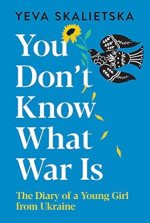
There’s a particular kind of magic that lives inside locally owned, independent bookstores, the kind that greets you the moment the bell over the door jingles and you step inside. My favorite bookstore has this lovely hum of quiet busyness: people browsing, pages turning, low voices chatting about books, and booksellers moving through the space, ready with a recommendation. I have a ritual whenever I visit my favorite shop: I pick out a picture book and I ask Norine, whose recommendations have never steered me wrong, what I should read next. On one such visit, I left with two books tucked under my arm: the picture book, Home by Matt De La Peña and Loren Long and a memoir, You Don’t Know What War Is: The Diary of a Young Girl from Ukraine by Yeva Skalietska. I read them together, and to my surprise, they formed a powerful, poignant pairing. They echoed one another in unexpected and moving ways.

As I read, I noticed so many connections between the texts, and I’m excited to share some of those favorite moments that highlight the powerful themes of survival, home, and belonging.

In You Don’t Know What War Is, Yeva writes, “Every day, my heart gets torn into pieces as I watch what’s happening in my home country, in my hometown. Those who survive the war will never be the same as before. They will enjoy life and enjoy their days again, but only because it is a day without war. Now they know, and will forever know, what it’s like to wake up to the sounds of shelling and missiles. And what it’s like to pray for your home every day.”

In Home, the narrator says, “But a day may come when you learn how a home can be lost… Through the back window of an old truck, you watch the only home you’ve ever known grow smaller and smaller behind you. A day may come when it’s hard to find your footing, when each gust of wind threatens to sweep you up and carry you away.”

Together, these books capture the heartbreak of leaving home, whether through war or uncertain change.

Even when home is left behind, safety and belonging can still be found in the people we love. In You Don’t Know What War Is, Yeva writes, “Even when my hands would shake with fear, I knew for certain that as long as I am with Granny, she will do everything in her power to keep me safe.” Home echoes this with, “Home is not a house you leave behind but the people who walk beside you.”

These lines show that home is not just a place—it’s the relationships with the people around us that carry us through fear, change, and uncertain times.

Both books end on a note of hope, reminding readers that even in the face of loss and uncertainty, there is strength in belief and connection. Yeva writes, “I’m confident that things will work out for me. I’m thankful to God and to the kind people I’ve met along the way. Everything will be all right. I believe that!” Home closes with its own promise: “Promising that all life is one life and when the winds do come, they will carry you home.”

I loved how the distinct writing styles of these two books complimented each other. Yeva’s direct diary entries reflect the voice of a twelve-year-old caught in the chaos of conflict. Her often short, punchy sentences capture the daily struggle to survive a war and everyday normal concerns of a twelve-year-old. In contrast, Home’s lyrical and flowing text explores the universal need for belonging and the ways home takes shape in our lives. Their styles paired perfectly. Reading Home alongside You Don’t Know What War Is was a beautiful twist of fate that deepened my connection to both stories, edifying my reading experience. But…maybe it wasn’t a twist of fate after all, but rather the value of independent booksellers who guide us toward the books we didn’t know we needed. I highly recommend reading these two books together!

TRY THIS TOMORROW: USING QUICKWRITES TO BUILD BACKGROUND KNOWLEDGE

Sep
11

Part of a Series on Using Quickwrites in Grades 6–12 Literacy Classrooms

Quickwrites can be powerful tools to help students build or activate the background knowledge they need to comprehend complex texts. When used intentionally, quickwrites support adolescent readers by:

  • Explicitly introducing key concepts that will enhance comprehension
  • Activating prior knowledge to help students connect new ideas to what they already know
  • Encouraging peer-to-peer learning through shared responses and discussion
  • Providing formative assessment for teachers to identify gaps in understanding or areas that need additional support

In Practice:

Example: Restorative Justice Quickwrite PPT

In this example, students are preparing to read a central text about a young person engaged in community service. To support comprehension, the teacher uses a quickwrite to introduce the concept of restorative justice.

Before reading the main text, students explore different ways young people may be held accountable after committing a crime. This quickwrite serves as a pre-reading activity and sets the stage for deeper engagement and understanding.

As you review this quickwrite, consider:

  • How does the shared text help build essential background knowledge?
  • In what ways do the response prompts invite students to connect personally or critically?
  • How does sharing responses as a class deepen understanding and create an entry point into the central text?


THE HISTORY OF INFORMATION BY CHRIS HAUGHTON

Sep
09

I am always fascinated by all the different ways authors decide to organize information. The choices that authors make are so important for readability and engagement. I think this is especially true when writing non-fiction. The History of Information, by Chris Haughton, is a great example of a book with very thoughtful organization of ideas and engaging content for both kids and adults. 

Chris Haughton is best known as a writer/illustrator of picture books. I love his book Shh! We Have a Plan. His art style is unique – with great use of bold colours and lines.

The idea to write this book came to Chris 17 years ago, when he found out that UC Berkeley had started putting some lectures online to listen to for free. One of the free lectures was called “The History of Information”. After he listened to the lecture, he contacted the professors, Paul Duguid and Geoff Nunberg. He got their reading list for the course and started to think about how he could turn this course into a book.  Over the years, they graciously helped him with editing the book. It was truly a labour of love. 

In The History of Information, Haughton combines both print and illustrations in delightful ways. Through the use of short bursts of information, eye-catching timelines and interesting tidbits, Haughton takes us through the fascinating history of information – spanning from the advent of “language and communication” hundreds of thousands of years ago to present day. 

Throughout the book, Haughton does a great job explaining things, some of which I had never even heard of before! His view of history is expansive and takes us around the globe, noting the contributions of many different continents and cultures. I appreciated his ability to synthesize and explain ideas and concepts in such an entertaining way. This book would be a fantastic mentor text for multi-modal writing, the creation of infographics, or even paragraph writing. 

To learn more about Chris Haughton and The History of Information, click here. 


ALMOST SUNSET BY WAHAB ALGARMI

Sep
07

Almost Sunset by Wahab Algarmi is a contemporary middle grade graphic novel that follows seventh-grader Hassan as he navigates the challenges of fasting during Ramadan while balancing school, soccer, and friendships. Hassan doesn’t want his classmates to know he’s fasting, but hiding his faith makes his days even harder. Between struggling to stay awake in class, keeping his grades up, and giving his best on the soccer field, Hassan feels overwhelmed. At home, the sense of community during Ramadan brings comfort, but he still feels torn between his traditions and his desire to fit in.
Hassan is relatable as his struggles with balancing faith and school life are portrayed honestly, from his guilt over sneaking food to his frustration at not being understood by his peers. The internal conflict and guilt show an honest and gentle portrayal of a young person learning from choices made and the adults who support them through it. The dynamic between Hassan and his friends shows supportive and sometimes competitive relationships that are realistic to middle grade readers.

Almost Sunset is a great addition for middle grade classrooms and libraries. It offers representation for Muslim students while also educating others about Ramadan. Its illustrations and dialogue make it accessible and appealing for all readers. It’s a story about Ramadan, but also a narrative around growing up, figuring out who you are and finding community.

TRY THIS TOMORROW: WHAT IS A QUICKWRITE?

Sep
04

An Introduction to a Series on Using Quickwrites in Grades 6–12 Literacy Classrooms

Quickwrites are a flexible way of inviting student thinking, building confidence, and preparing students for deeper reading, writing, and discussion. In this series, we’ll explore how quickwrites can support different instructional goals. But first, what exactly is a quickwrite? You may be familiar with the term from our recent post on starting the year with quickwrites.

A Quickwrite Is…

A quickwrite is a short, first-draft written response to a shared text. It’s ungraded, unedited, and often written in just 3–7 minutes. Quickwrites offer daily time to read, write and speaking within a classroom community. Because quickwrites are low-stakes and focused on ideas, not mechanics, they help students develop writing fluency and voice without fear.

What are the parts of a quickwrite?

A piece of text (shared reading)​ Invitations to respond​
  • A short article​
  • An excerpt from an article​
  • A video​
  • An image​
  • An infographic​
  • A short story​
  • An excerpt from a short story​
  • A poem​
  • An audio clip​
  • Create 3-5 invitations to respond that might inspire thinking around:​
    •  A connection​
    •  A craft​
    •  An opinion​
    •  Another point of view​
    •  An elaboration​
  • Begin with “Write about whatever comes to mind after reading this text.”​

Why Quickwrites Work

As literacy expert Linda Rief, author of The Quickwrite Handbook, explains:

“A quickwrite is a first-draft response to a short piece of writing… It pulls words out of the writer’s mind. I am always surprised at the precision of language, level of depth and detail, and clarity of focus I hear when a student reads a three-minute quickwrite out loud.”

She also reminds us: “Writing and teaching writing can be intimidating… Quickwrites offer an easy and manageable writing experience that helps both students and teachers find their voices.”

When and Why to Use Quickwrites

Quickwrites can serve many purposes in your literacy classroom. You might use them to:

  • Reflect on students’ reading or writing identities
  • Generate ideas for an upcoming writing piece
  • Practice analyzing the craft of a writer
  • Preview vocabulary or concepts before a shared reading
  • Build background knowledge around a topic or theme
  • Create space for shared reading and discussion
  • Foster a supportive and thoughtful classroom community

What’s Next in This Series?

In upcoming posts, we’ll look at how quickwrites can be used to:

  • Build background knowledge
  • Study author’s craft
  • Explore vocabulary
  • Reflect on identity and perspective
  • Prepare for a unit of writing

Stay tuned for more ways to intentionally incorporate quickwrites into your teaching routine.

THE CASTLE ROSE BY TABITHA CAPLINGER

Sep
02

As a person who enjoys fantasy novels with emotional depth and a touch of the supernatural, The Castle Rose by Tabitha Caplinger was a captivating read. Set in the atmospheric city of New Orleans, the story follows Odette Durand, a coffee-addicted bookshop manager seeking a fresh start. Her life takes an unexpected turn when she encounters Bastian Roux, a ghostly figure haunting the abandoned Castle Rose Theatre. As Odette becomes entwined in a century-old curse, she must navigate questions of belief, redemption, and the possibility of breaking the barrier between life and death.

Themes of love, sacrifice, and redemption are included throughout the book. The story explores the concept of second chances and the magic that occurs with the power of love. The setting of New Orleans enhances the mysterious but supernatural atmosphere, providing a rich background for the unravelling drama.
Odette is a relatable protagonist whose skepticism and wit make her quite an engaging character. Her interactions with Bastian, the brooding but secretly vibrant musician, are filled with both tension and tenderness. Bastian’s struggle with his past and the curse that binds him adds complexity to his character. Supporting characters, that you meet on the way, contribute significantly to the story’s warmth and humour.

Caplinger’s writing is extremely lyrical and poetic, capturing the essence of New Orleans and the haunting beauty of the Castle Rose Theatre. The text balances romance, mystery, and supernatural elements, creating a gripping and well-paced story. The descriptions immerse the reader in the sights, sounds, and scents of the setting, creating an atmospheric feel instantly.

I recommend this book to readers who enjoy paranormal romance, fairy tales, fantasy and stories with a strong sense of place. Fans of Beauty and the Beast will find familiar themes presented in a modern and engaging way. The novel is suitable for readers aged 13 and up, offering a neat and heartfelt romance with themes you would find yourself constantly pondering about. Whether you’re a fan of fantasy, romance, or stories of redemption, The Castle Rose is a novel that will remain in your thoughts long after the last page.