TRY THIS TOMORROW: WHAT IS A QUICKWRITE?
An Introduction to a Series on Using Quickwrites in Grades 6–12 Literacy Classrooms
Quickwrites are a flexible way of inviting student thinking, building confidence, and preparing students for deeper reading, writing, and discussion. In this series, we’ll explore how quickwrites can support different instructional goals. But first, what exactly is a quickwrite? You may be familiar with the term from our recent post on starting the year with quickwrites.
A Quickwrite Is…
A quickwrite is a short, first-draft written response to a shared text. It’s ungraded, unedited, and often written in just 3–7 minutes. Quickwrites offer daily time to read, write and speaking within a classroom community. Because quickwrites are low-stakes and focused on ideas, not mechanics, they help students develop writing fluency and voice without fear.
What are the parts of a quickwrite?
| A piece of text (shared reading) | Invitations to respond |
|
|
Why Quickwrites Work
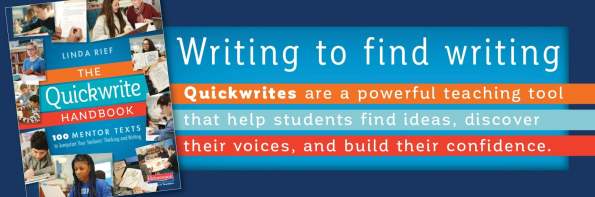
As literacy expert Linda Rief, author of The Quickwrite Handbook, explains:
“A quickwrite is a first-draft response to a short piece of writing… It pulls words out of the writer’s mind. I am always surprised at the precision of language, level of depth and detail, and clarity of focus I hear when a student reads a three-minute quickwrite out loud.”
She also reminds us: “Writing and teaching writing can be intimidating… Quickwrites offer an easy and manageable writing experience that helps both students and teachers find their voices.”
When and Why to Use Quickwrites
Quickwrites can serve many purposes in your literacy classroom. You might use them to:
- Reflect on students’ reading or writing identities
- Generate ideas for an upcoming writing piece
- Practice analyzing the craft of a writer
- Preview vocabulary or concepts before a shared reading
- Build background knowledge around a topic or theme
- Create space for shared reading and discussion
- Foster a supportive and thoughtful classroom community
What’s Next in This Series?
In upcoming posts, we’ll look at how quickwrites can be used to:
- Build background knowledge
- Study author’s craft
- Explore vocabulary
- Reflect on identity and perspective
- Prepare for a unit of writing
Stay tuned for more ways to intentionally incorporate quickwrites into your teaching routine.