CRAFT STUDIO: ALLIE MILLINGTON’S OLIVETTI
What I was Reading:
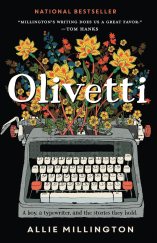
Allie Millington’s Olivetti is a beautifully crafted novel that unites a boy with the stories held within the family’s vintage typewriter, Olivetti, creating a touching exploration of memory, identity, and the power of storytelling. Ernest, the boy, has a delightful habit: he loves to read the dictionary. Whenever he needs an escape from his reality, he finds comfort in reciting memorized words from the dictionary in alphabetical order. This unique coping mechanism allows him to escape into a world of language, where each collected word acts as a soothing balm to his anxious thoughts.
What Moves I Notice the Author Making:
Millington embeds this ritual throughout the story, and this helps ground Ernest when he’s anxious. The rhythmic cadence of reciting words like “Disappear. Disappearance. Disappoint. Disappointment. Disapproval. Disapprove.” provide a comforting sense of order and predictability in many moments of uncertainty (Millington, p. 19).
I love how this character continuously draws strength and reassurance from his collected reservoir of words. For example:
“Mr. Robles nudged me forward into his office, and my family turned.
My stomach flipped between my legs.
Escape. Escapement. Escarpment. Eschew. Escort. Escutcheon.
“Ernest.” The lines on Dad’s face deepened, like canyons carved into his skin. “It’s your mom. She’s missing.” (Millington, p. 32).
Millington uses this delightful craft move as a recurring motif to enhance the character’s journey. After revisiting the numerous word sequences, I noted how they initially enhance the narrative and deepen the impact of each paragraph and/or sentence. The sentences leading into and following the sequence of intentionally collected words allow for a deeper exploration of themes such as the search for order in chaos, the power of language, and the importance of personal coping methods.
Possibilities for Writers:
- Establish a unique habit or coping mechanism for your character that reveals personality. This ritual can help with adding layers to the character’s journey and offering readers insight into their inner world.
- Explore how language or specific word choices can reflect a character’s mindset. For instance, the deliberate selection of words could mirror a character’s attempt to impose order or control when faced with chaos, enhancing emotional depth.
- Make intentional decisions about how a character’s relationship with words or storytelling shapes their sense of self.
- Experiment with how the rhythm of specific words or phrases can influence the pacing of a scene, slowing down or speeding up moments to align with the character’s internal experience.
- Use the specific words a character focuses on to reflect larger themes in the story. For example, Millington’s use of words related to disappearance and escape mirrors the broader tension surrounding Ernest’s mother.