Margin Notes

OH BROTHER BY GEORGINA CHADDERTON

Sep
29

I absolutely loved this title.

Oh Brother is a graphic memoir by Georgina (Gina) Chadderton. As the story opens, Gina is spending the summer before she starts middle school moving into a new house with her family. Her brother, Rob, is autistic and has high support needs, so their home has to be set up in very specific ways to keep him safe. Doors and cupboards are secured, and even the fridge and windows have added safety measures. Early in the story, we see exactly why. Shortly after the family moves in, the new neighbours come over to let them know that Rob has somehow made his way into their living room.

You also learn so much about autism simply through the way Chadderton tells the story. Rob does not use many spoken words, but he communicates constantly through sounds, gestures, pointing, signing, and routines his family has learned to understand. The memoir gives readers a real sense of how frustrating it can be to know what you want or how you are feeling but not always be able to make other people understand.

But this is also very much Gina’s story. We experience life with Rob through the perspective of a sister who loves him deeply and can also feel embarrassed, worried, frustrated, protective, and completely overwhelmed. That honesty is part of what made the book feel so vulnerable and important.

There is another layer, too. In the back matter, Chadderton shares that she herself was diagnosed with autism as an adult. Knowing that makes you look back at Gina’s experiences differently and further challenges any narrow idea of what autism looks like.

Published as a middle grade graphic memoir, Oh Brother could be a powerful mirror for students who have neurodivergent siblings and an equally important window for readers who want to better understand autism, communication, family, and the complicated ways we love the people closest to us.


TRY THIS TOMORROW: A NEW COLLECTION OF LESSONS

Sep
24

If you’re looking for current and engaging lessons and texts to bring into your classroom, there is a new resource worth checking out. This fall, the Learning Network introduced a series of 15-minute lesson plans built around timely topics, texts, images, questions, and ideas. A new lesson is published each school day, with topics rotating across ELA, social studies, STEM, and the arts and media. Each one can work as stand-alone learning opportunity, but can easily lead to more opportunities for conversation, reading, writing, or inquiry.

For example, the  Taylor and Travis Sentence Scramble, asks students to attempt to put a set of sentences in the order they appeared in an article, opening up authentic conversations about text structure, specifically cohesion, sequencing, and how writers guide readers through ideas.

The lesson can stop there, or, if students are interested and you have the time, there is a natural pathway into more reading, discussion, and critical thinking. Each of the bite-size lessons also includes an “If you’d like to go further” option. In the Taylor and Travis Sentence Scramble, students can move from thinking about how a paragraph is constructed to a bigger question about journalism: why would The New York Times devote around two dozen reporters and editors to covering a celebrity wedding? Students can read a related Times Insider piece and consider whether that investment of newsroom resources was justified.

The flexibility of these 15-minute lessons means they can be used in the way that makes the most sense for your students and the learning that is already happening in the classroom. And, with a new lesson added every day, this is a collection worth bookmarking and coming back to when you are looking for new texts and learning opportunities.

FAKE SKATING BY LYNN PAINTER

May
26

Some books are just so fun to read. The kind you pick up thinking you will read a chapter or two, and suddenly you are halfway through and fully invested in the characters’ lives. Fake Skating by Lynn Painter is exactly that kind of read.

At its core, this is a classic fake dating story with a hockey twist. Dani moves back to Minnesota after her parents’ divorce and reconnects with her childhood best friend, Alec, now known as “Zeus,” the town’s hockey star. When some not so great photos threaten his reputation, he convinces Dani to pretend to be his girlfriend to clean up his image. You can probably guess where it goes from there.

And yes, on paper, it sounds familiar. But somehow, it just works.

What makes this story stand out is the emotional layering beneath the trope. Dani’s past, constantly moving and dealing with bullying, shapes how she navigates relationships and trust. Alec is more than the confident hockey player. He is carrying his own weight with a father whose life changed after a devastating accident. These details give the story more depth than you might expect and make the characters feel real in a way that sticks.

There is also something really appealing about the world Painter builds. The hockey culture, the team dynamics, Dani’s grumpy but lovable grandfather, a former NHL player, and even the inclusion of a shared soundtrack all add to the experience. It feels warm, familiar, and just a little nostalgic.

This would be a great addition to a high school classroom library, especially for readers who gravitate toward romance or sports stories. It is accessible, engaging, and offers plenty to talk about, including identity, reputation, loyalty, and the choices people make to protect the people they care about. It could also open up conversations about how quickly narratives can shift, both online and in real life.

I will be honest. This is not a book that tries to reinvent the genre. But it does not need to. It gives readers exactly what they are hoping for in a way that feels genuine and satisfying.

And sometimes, that is exactly the kind of book students need


TRY THIS TOMORROW: TEN IDEAS FOR REFLECTING AT THE END OF THE SCHOOL YEAR

May
21

In “10 Ideas for Reflecting at the End of the School Year,” the New York Times Learning Network shares reflection ideas that move beyond simple end of year responses. Students are invited to consider creative ways to reflect, from creating playlists that capture memories from the year to reflecting on moments of struggle.

What makes this collection so impressive is its variety. Some invitations are deeply personal, some creative, some analytical, and some highly social. There are opportunities for writing, drawing, discussion, multimodal composition, and inquiry. The range of approaches allows students to reflect in ways that feel authentic to who they are as learners and how they make sense of their experiences.

As the school year winds down, this teaching resource might spark entirely new possibilities for reflection in your classroom.

BETH IS DEAD BY KATIE BERNET

May
12

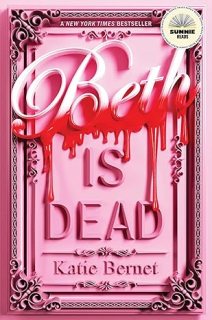
It is wildly brave to reimagine Little Women for a debut novel, and Katie Bernet does just that.

Published in 1868, Louisa May Alcott’s Little Women and the four sisters it chronicles are characters that settle into readers and then never really leave. They are characters we feel we know, and almost like we have some claim to them. So, to take that story and reshape it for a modern audience is an undertaking that comes with a built-in audience and built-in expectations.

In Beth Is Dead, the story centers on the March sisters as they try to make sense of Beth’s death. As the investigation unfolds, each sister’s motives come under scrutiny, and the story begins to surface the kinds of secrets that can fracture even the closest relationships. The novel moves between a Then and Now structure, shifting from past perspectives, including Beth’s, to the present-day investigation, slowly building a fuller picture of what happened.

Before reading Beth Is Dead, I did something I rarely do. I read comments on Goodreads, watched reactions on TikTok, and went down a few Reddit rabbit holes, and found no real consensus. Some readers approached the book like a kind of collective Easter egg hunt, searching for connections to the original. There are many, and they are fascinating, but they are also full of spoilers, so I will leave those for you to discover. Others were far less enthusiastic, with a wave of purist frustration running through their responses. It is rare to see a debut novel take hold in so many different spaces at once, and for completely different reasons. It made me want to read it even more.

Some of the reaction comes from the decision to frame the story as a murder mystery, with the sisters drawn in ways that feel darker than readers might expect. For me, though, the March sisters arrived in 2026 exactly as they would. Jo’s nineteenth century ambition becomes the relentless drive of a modern influencer. Meg’s desire for pretty things sharpens into a more complicated relationship with image and materialism. Amy’s artistic ego takes on a harder edge, shaped by reputation and the need to be taken seriously. And Beth sits at the center of it all. In a world that expects her to be gentle and selfless, her murder on New Year’s Day becomes the moment that forces the remaining sisters to stop performing and start paying attention.

One of the most striking choices in the novel is the reimagining of Mr. March. In this version, the original Little Women exists as a memoir written by Rob March, one that has since been called into question. Bernet uses our familiarity with the classic and asks us to reconsider it. We think we know the sisters because we have read the book, but Bernet asks us to look again, this time with a more critical eye, and to consider who they might be beyond the version that was first given to us.

I walked into this story with a real attachment to the March sisters. Any opportunity to spend more time with them, and to see who they might be when shaped by a different world, is one I am always going to take. Unlike some other readers, it was my love of the original that made me curious about how they would be reimagined in 2026. If you are willing to read it on those terms, there is a lot here to think about.

If you do pick it up a copy of Beth Is Dead, there are small details that readers of Little Women will recognize. These are nowhere near the most important ones (avoiding any spoilers), but they give you a sense of what to look for.

  • Laurie’s WiFi password is “Castles1868,” a quiet nod to the sisters’ “castles in the air” and the year the original was published.
  • Amy stress eats lime Jolly Ranchers, a modern echo of the pickled limes that once got her into trouble, now used as a tell when she is hiding something.
  • And a small one I loved, a character works at Lottie’s Diner, a reference to Louisa May Alcott herself.


POETRY MAGAZINE ON SORA

Apr
28


“Every sport, every little industry requires its own corner, its own voice, that it may find its friends, greet them, welcome them.”
— Harriet Monroe, founding editor of Poetry (1912)

As part of our April Poetry Month series, we’re highlighting Poetry magazine, available through our free to borrow digital collection on SORA.

There is something nice about a magazine like Poetry. It does not ask for a huge time commitment, and it does not need to be read in order. You can open an issue, read one poem, and still find something worth sitting with.

Founded in 1912, Poetry has been introducing readers to poems and poets for more than a century. Over the years, it has published many of the most recognizable voices in literature while continuing to make space for new and emerging writers. That means each issue offers a mix of voices, styles, and perspectives, and there is always the chance you will come across something unexpected.

That feels especially fitting to celebrate during Poetry Month, a time to celebrate writing that helps us notice, reflect, question, and feel a little more deeply.

“We want the magazine to question even as it provides respite, to be a space where every kind of poetry can be read, heard, and received with the curiosity and wonder it deserves.”
— Adrian Matejka, editor of Poetry magazine

You can find Poetry on SORA as part of our free digital collection.


CRAFT STUDIO: THERE IS A RECIPE FOR GETTING OVER SOMEONE

Apr
23

What I Was Reading:

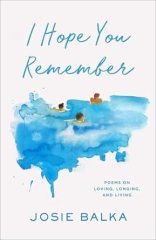
In her poem “There Is a Recipe for Getting Over Someone,” Josie Balka uses the familiar and drawn-out style of an online recipe to show how messy healing from heartbreak can be. We have all been there when we are scrolling past a long personal story just to find the actual instructions. However, Balka proves the story part isn’t just filler because it is the hard work of making sense of your feelings. By turning abstract grief into ingredients, she shows that moving on isn’t just about waiting. It is a deliberate process of mixing the heavy parts of your past until they turn into something new

There is a recipe for getting over someone
It’s long-winded
And lacks simplicity
And there’s always a bunch of preamble before you get to
the good part
The kind that has you saying to yourself
“Why is this so long? Just tell me what I need to do”
And once you get past the part you don’t care for
Or want to know about
Or have any interest in understanding
You get your list of ingredients and instructions
And this recipe is tedious
Lengthy
Difficult
Salty
And will be worth the effort in the end . . . it should be, anyway
It starts with a cup of denial
A fistful of sadness
A few tablespoons of anger
A piece of you that you don’t get to have back
And you have to let that marinate for a while or it just won’t turn
out properly
Once you think that’s finished
Add a pinch of regret—not too much, though, and only if you want
It’s more of a preference
A bit of confusion, to taste
And a surprising amount of realization that you’re actually going
to be okay
More than you’d ever think to add, actually

What I Notice the Writer Doing: 

  • The writer uses the format of a recipe to structure the poem.
  • Instead of starting right away with ingredients, the poem begins with an introduction.
  • The speaker talks directly to the reader, making the poem feel personal and relatable.
  • Feelings like denial, sadness, anger, and confusion are treated as ingredients, helping readers picture emotions as something real and measurable.
  • The language moves back and forth between practical and emotional, blending instructions with reflection.
  • The ending allows room for growth rather than offering a neat or perfect conclusion.

 Possibilities for Writers:

  • Write a recipe poem
  • Try using a familiar format (like a recipe, instructions, a checklist, or rules) to write about a personal or emotional experience, or revise a personal narrative piece by borrowing the structure of a nonfiction text.
  • Begin a piece with explanation or buildup before getting to the main idea.
  • Turn feelings into physical objects or ingredients to help readers understand them.
  • Write directly to the reader to create connection.
  • Let a piece end with reflection instead of a clear solution.


CRAFT STUDIO: OCTOPUS MOON

Apr
16

What I Was Reading:

In Octopus Moon by Bobbie Pyron, Pearl summarizes her friendship with Rosie by naming all the ways Rosie knows her so well. She includes small, ordinary details, as well as fears and long-held dreams for the future, that she has shared with Rosie. Each line adds to a sense of closeness and trust. But at the very end of the passage, there is a shift. Pearl reveals that there is something significant that Rosie does not know. In just a few lines, the writer shows how a person can feel deeply known, and trust someone so much, and still be fearful of revealing something new about themselves.

Rosie
knows everything about me.
My favorite colors
and books
and TV shows
and songs.
She knows
I’m terrified of trampolines
and Ferris wheels.
She knows
I want to be a marine biologist
more than anything.

But Rosie does not know
about Dr. Jill

What I Notice the Writer Doing:

  • The writer uses short lines and white space so each detail stands on its own.
  • Small, specific details help us understand Pearl without explanation.
  • Instead of listing information in one sentence, the writer lets the details unfold slowly, one line at a time.
  • The repetition of “She knows” creates a sense of rhythm and reinforces how close Rosie and Pearl are.
  • As the passage ends, the writer breaks from the pattern she has established.
  • The final sentence names what Rosie does not know, standing in contrast to everything that comes before it.
  • By placing this line on its own and saving it for the end, the writer allows the truth to land with impact.

Possibilities for Writers:

  • Experiment with listing details across several short lines instead of combining them into a single sentence.
  • Try repeating a phrase to build rhythm and show closeness or familiarity.
  • Use specific, everyday details to reveal character.
  • Consider saving an important or difficult truth for the end of a piece.
  • Play with line breaks and white space to guide the reader’s attention.
  • Write about something many people know about you and then explore something they don’t.


OCTOPUS MOON BY BOBBIE PYRON

Apr
14

I tear my eyes from my sweet dog
and look up at the sliver of moon,
barely there.
“I like it better when it’s full,” I say.

Laurel looks at me, her dark eyebrows scrunched up.
“But the moon is always full”

I blink. “It is?”
She points
at the moon.
“The moon is lit by the sun.
The dark part is just a shadow.”

“It’s always full?” I ask again.
“Yes, Pearl. The moon
is always full.”

Bobbie Pyron’s Octopus Moon is a beautiful and deeply needed novel in verse about a ten-year-old girl named Pearl as she begins to experience childhood depression. Pearl is thoughtful, sensitive, and deeply empathetic to all, especially the ocean and its creatures. But as fifth grade begins, life starts to feel heavier in ways she cannot fully explain. Things that once felt manageable, like friendships, school, and everyday life, begin to shift under the weight of something she does not yet have the words for.

I would recommend this book to any reader who wants to better understand what depression can look like in childhood. Its emotional honesty feels especially powerful because, as Pyron explains in her author’s note, Octopus Moon is the book she needed when she was young, before there were enough stories or language to help children understand what they were experiencing.

One of the most moving parts of the novel is Pearl’s relationship with her dog, who loves every version of her without question. That steady, unconditional love becomes a quiet but powerful thread throughout the story, reminding readers that Pearl is still herself even when depression makes her feel otherwise. The novel also shows the importance of support systems. Some of Pearl’s friends and family understand what she is going through right away, while others only begin to show up for her after doing some learning of their own about mental illness and realizing that depression is not something a person can simply “wish away.”

Because it is written in verse, Octopus Moon allows Pearl’s emotions to surface in a way that feels both gentle and deeply affecting. The language is accessible, but it never oversimplifies what Pearl is going through. In the end, Octopus Moon reminds us that, like the moon, a person can be shadowed and still remain whole.


ADDRESS UNKNOWN BY KATHRINE KRESSMANN TAYLOR

Mar
24


Certain texts possess a rare economy of language, carrying an emotional and intellectual weight that far exceeds their page count. Kathrine Kressmann Taylor’s Address Unknown is exactly that kind of work.

What makes the most recently published edition increasingly special as an additional to the classroom library are the supplemental pieces that frame the narrative. In her introduction, Margot Livesey sets a powerful stage, noting that when the story was first published in 1938, it served as a “jolt” to an American public largely looking the other way. Livesey’s analysis highlights the confounding, timeless questions at the heart of the book: How do we know what we know? Why does a good person become a bad person? What power does a citizen have against the state?

The story itself unfolds entirely through letters between two friends and business partners: Max, a Jewish art dealer in San Francisco, and Martin, who has returned to Germany in 1932. While their initial tone is warm and familiar, the relationship shifts with the political climate. This gradual, and then sudden, erosion of loyalty demonstrates how easily individual identity can be consumed by a larger ideology. It is a hauntingly relevant lesson for young adults today, who may see these same patterns of normalization and polarization reflected in their own daily news.

The narrative concludes with an ending that is easy to miss at first, but impossible to forget once seen. This sense of unease is only deepened by the afterword, where the author’s son, Charles Douglas Taylor, reveals his mother’s real-world inspirations. By providing this historical record, he transforms a fictional exchange into a chilling account of actual events, offering students a touching yet sobering perspective on the author’s intent.

As a masterclass in the epistolary form, Address Unknown is an essential addition to high school libraries. It is a concise but profound case study in how ideology can reshape a soul, sparking the kind of critical thinking and debate that is vital in our increasingly polarized world.