Margin Notes

A TWO-IN-ONE BOOK RECOMMENDATION OF HOME BY MATT DE LA PEÑA AND LOREN LONG AND YOU DON’T KNOW WHAT WAR IS BY YEVA SKALIETSKA – A TWIST OF FATE

Sep
16

There’s a particular kind of magic that lives inside locally owned, independent bookstores, the kind that greets you the moment the bell over the door jingles and you step inside. My favorite bookstore has this lovely hum of quiet busyness: people browsing, pages turning, low voices chatting about books, and booksellers moving through the space, ready with a recommendation. I have a ritual whenever I visit my favorite shop: I pick out a picture book and I ask Norine, whose recommendations have never steered me wrong, what I should read next. On one such visit, I left with two books tucked under my arm: the picture book, Home by Matt De La Peña and Loren Long and a memoir, You Don’t Know What War Is: The Diary of a Young Girl from Ukraine by Yeva Skalietska. I read them together, and to my surprise, they formed a powerful, poignant pairing. They echoed one another in unexpected and moving ways.

As I read, I noticed so many connections between the texts, and I’m excited to share some of those favorite moments that highlight the powerful themes of survival, home, and belonging.

In You Don’t Know What War Is, Yeva writes, “Every day, my heart gets torn into pieces as I watch what’s happening in my home country, in my hometown. Those who survive the war will never be the same as before. They will enjoy life and enjoy their days again, but only because it is a day without war. Now they know, and will forever know, what it’s like to wake up to the sounds of shelling and missiles. And what it’s like to pray for your home every day.”

In Home, the narrator says, “But a day may come when you learn how a home can be lost… Through the back window of an old truck, you watch the only home you’ve ever known grow smaller and smaller behind you. A day may come when it’s hard to find your footing, when each gust of wind threatens to sweep you up and carry you away.”

Together, these books capture the heartbreak of leaving home, whether through war or uncertain change.

Even when home is left behind, safety and belonging can still be found in the people we love. In You Don’t Know What War Is, Yeva writes, “Even when my hands would shake with fear, I knew for certain that as long as I am with Granny, she will do everything in her power to keep me safe.” Home echoes this with, “Home is not a house you leave behind but the people who walk beside you.”

These lines show that home is not just a place—it’s the relationships with the people around us that carry us through fear, change, and uncertain times.

Both books end on a note of hope, reminding readers that even in the face of loss and uncertainty, there is strength in belief and connection. Yeva writes, “I’m confident that things will work out for me. I’m thankful to God and to the kind people I’ve met along the way. Everything will be all right. I believe that!” Home closes with its own promise: “Promising that all life is one life and when the winds do come, they will carry you home.”

I loved how the distinct writing styles of these two books complimented each other. Yeva’s direct diary entries reflect the voice of a twelve-year-old caught in the chaos of conflict. Her often short, punchy sentences capture the daily struggle to survive a war and everyday normal concerns of a twelve-year-old. In contrast, Home’s lyrical and flowing text explores the universal need for belonging and the ways home takes shape in our lives. Their styles paired perfectly. Reading Home alongside You Don’t Know What War Is was a beautiful twist of fate that deepened my connection to both stories, edifying my reading experience. But…maybe it wasn’t a twist of fate after all, but rather the value of independent booksellers who guide us toward the books we didn’t know we needed. I highly recommend reading these two books together!
CRAFT STUDIO: ALLIE MILLINGTON’S OLIVETTI

Mar
20

What I was Reading:

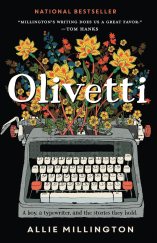
Allie Millington’s Olivetti is a beautifully crafted novel that unites a boy with the stories held within the family’s vintage typewriter, Olivetti, creating a touching exploration of memory, identity, and the power of storytelling. Ernest, the boy, has a delightful habit: he loves to read the dictionary. Whenever he needs an escape from his reality, he finds comfort in reciting memorized words from the dictionary in alphabetical order. This unique coping mechanism allows him to escape into a world of language, where each collected word acts as a soothing balm to his anxious thoughts.

What Moves I Notice the Author Making:

Millington embeds this ritual throughout the story, and this helps ground Ernest when he’s anxious. The rhythmic cadence of reciting words like “Disappear. Disappearance. Disappoint. Disappointment. Disapproval. Disapprove.” provide a comforting sense of order and predictability in many moments of uncertainty (Millington, p. 19).

I love how this character continuously draws strength and reassurance from his collected reservoir of words. For example:

“Mr. Robles nudged me forward into his office, and my family turned.

My stomach flipped between my legs.

Escape. Escapement. Escarpment. Eschew. Escort. Escutcheon.

“Ernest.” The lines on Dad’s face deepened, like canyons carved into his skin. “It’s your mom. She’s missing.” (Millington, p. 32).

Millington uses this delightful craft move as a recurring motif to enhance the character’s journey. After revisiting the numerous word sequences, I noted how they initially enhance the narrative and deepen the impact of each paragraph and/or sentence. The sentences leading into and following the sequence of intentionally collected words allow for a deeper exploration of themes such as the search for order in chaos, the power of language, and the importance of personal coping methods.

Possibilities for Writers:

  • Establish a unique habit or coping mechanism for your character that reveals personality. This ritual can help with adding layers to the character’s journey and offering readers insight into their inner world.
  • Explore how language or specific word choices can reflect a character’s mindset. For instance, the deliberate selection of words could mirror a character’s attempt to impose order or control when faced with chaos, enhancing emotional depth.
  • Make intentional decisions about how a character’s relationship with words or storytelling shapes their sense of self.
  • Experiment with how the rhythm of specific words or phrases can influence the pacing of a scene, slowing down or speeding up moments to align with the character’s internal experience.
  • Use the specific words a character focuses on to reflect larger themes in the story. For example, Millington’s use of words related to disappearance and escape mirrors the broader tension surrounding Ernest’s mother.

TRY THIS TOMORROW: WRITING A BOOK RECOMMENDATION WITH A TOP 10 LIST USING AND THEN, BOOM! BY LISA FIPPS

Mar
18

Here are 10 reasons why I couldn’t put down And Then, Boom! by Lisa Fipps:

  1. Joe
    Joseph Oak’s voice is real and raw and connects you to his struggles from the beginning of the story to the end. Joe keeps his truths hidden from his friends and people who care for him, yet his fear and pain ring loud and clear throughout his internal monologues. His story is a window to the strength and loneliness of kids who deal with hardship every day.
  2. Novel in Verse
    The verse format works brilliantly for this story. It captures Joseph’s emotions in short, punchy lines that are filled with vulnerability, humor, and hope. The cadence of the story makes it a quick read, yet a deep one. This lyrical story will break your heart yet hope lingers.  
  3. Depiction of Poverty
    Fipps presents poverty in a matter-of fact way and highlights the daily struggles. She portrays poverty with raw honesty, yet she humanizes Joseph by highlighting his courage and spark, making him more than just his struggles. 
  4. Friendship
    Joseph’s best friends are absolute gems. Nick and Hakeem’s loyalty and unwavering support for Joe are a lifeline and support network throughout the story. These friendships are full of warmth, humor, and small acts of kindness that make a huge difference.
  5. Comic Book Heroes
    Joe makes sense of his world through comic book superheroes. The comic book metaphors layered and laced throughout the story add depth to his character. His own heroic journey of survival mirrors the stories of the superheroes he admires, yet even superheroes need help sometimes. I love how the book begins and ends with Joe’s superheroes musings, framing his own journey. 
  6. Grandmum
    Though she leaves us early in the story, Joe hangs on to her presence, their enduring bond and her love for him. She was and continues to be Joe’s anchor, the one who held everything together. Her love is a thread woven throughout Joe’s ups and downs and in-betweens.  
  7. Dogs
    Even in Joe’s most difficult moments, he shows compassion when he rescues and cares for a stray dog and her pups. I loved how his empathy and the healing power of caring for others, even in tough times, mirrored his own need for connection, companionship, care and love.  
  8. Humor and Hardship
    Fipp’s balance between humor and hardship keeps the story from feeling too heavy and it reminds the reader that there can be a duality between laughter and pain, it can coexist. Even in the toughest moments, there’s humor, whether it’s through Joe’s witty internal monologue or the banter with his friends. This balance between moments of joy and starks truth, made me think about my own life experiences when moments of sorrow coexisted with laughter.  
  9. Hope
    The “and-thens and BOOMS!” some good but mostly bad make the moments of hope in this story hard-earned. Hope prevails through Joe’s friendships, his small victories, moments of kindness and connection, a stray dog and her pups, and the helpers who step in when least expected in the darkest moments. Joe’s quiet hope, even after all the “and-thens” and “booms” that shake his world, show the reader what it truly means to hope.  
  10. A Story For Everyone
    And Then, Boom! shines a light on the experiences of kids living in poverty, kids with absent parents, kids who suffer the loss of a loved one, kids scared to ask for help, kids who live on the fringe of society and kids who have to grow up too fast. It’s a mirror for those who need it and a window for those who don’t understand this reality. 

CRAFT STUDIO: 20 REASONS TO LOOK UP FROM YOUR PHONE BY MOLLY BURFORD  

Feb
06

I am loving Molly Burford’s debut poetry collection, Moments to Hold Close. I have returned again and again to reread and relive how Burford captures the essence of the human experience, exploring how to love, live fully and the beauty of embracing both life’s simple and defining moments.  Here is a look at 20 Reasons to Look Up From Your Phone from her section, “The Moments You Have to Hold on To”.  


What I Was Reading:

20 Reasons to Look Up From Your Phone

Because the clouds are taking vacation

Because it’s 75 degrees and you’re sitting inside on your couch

Because there are books to read

Because your own story needs to be told

Because there’s music to be blasted with your windows open

Because your friend deserves your undivided attention

Because what you see online is not always truth

Because comparison is a thief*

Because you’re missing out on the laughter

Because you haven’t finished your painting

Because you haven’t finished your sentence

Because you haven’t finished watching the movie

Because you’re missing out on the moment in front of you

Because there are hands to hold

Because there are more interesting things to look at

Because your dog wants you

Because there are better ways to waste your time

Because the email can wait

Because the text can wait

Because your life cannot wait

What Moves I Notice the Author Making:

  • The author uses a consistent pattern by starting each reason with “Because,” creating a steady rhythm that leads into everyday moments we often overlook. This repetition anchors the reader in each line building urgency to reclaim the present moment.
  • The author uses a mix of playful, profound, and relatable reasons that speak directly to the reader’s experience, that encourages the reader to reconsider how they engage with the world.
  • The author often transitions between using “your” and “you’re”.

Possibilities for Writers:

  • Experiment with the impact of using “you’re” vs. “your.” Writers could explore the usage of “your” and “you’re” beyond the basic functions of possession and contraction to how it impacts craft and tone. Writers could explore how Burford’s usage of “your’ and “you’re” impacted how the reader felt either a personal sense of ownership or a direct call to action.
  • Develop pattern sentences to create rhythm and emphasis. Explore the impact of starting each sentence with the word “Because…”.
  • Explore the word “because” with students to deepen their understanding of cause-and-effect relationships.
  • Collaborative “Because” Poems: Write a group poem where each line begins with “because.” Students can contribute lines, building a collaborative piece that explores diverse perspectives or themes.
  • Create a collaborative writing experience with all students contributing to Another 20 Reasons to Look Up From Your Phone
  • Generate different ideas for other 20 Reasons Lists for writers to explore independently.

*The original text uses a word that would not be appropriate, and the word thief was substituted.

TRY THIS TOMORROW: EXPLORING CHARACTER DEVELOPMENT WITH SEMANTIC DIFFERENTIAL SCALES

Dec
05

In her book, When Kids Can’t Read What Teachers Can Do, Kylene Beers introduces several strategies to support the exploration of character development, one of which is Semantic Differential Scales. Using a Semantic Differential Scale is an effective way to track character development throughout the story as readers use evidence from the text to rate a character at the beginning, middle and end of the story. It allows readers to interpret character traits along a spectrum of opposing qualities (e.g., brave vs. timid, honest vs. deceptive). This scaffold encourages readers to consider the degrees of change and growth that character’s experience. By revisiting these scales throughout a text, students can visually map shifts in a character’s behavior or personality, deepening their comprehension of character arcs. Beers illustrates this concept using characters Roger and Mrs. Jones from Langston Hughes’ short story Thank You, M’am. Students can discuss their ratings with evidence from the text. 

Additionally, students could write a reflection explaining why they rated the character along certain points on the scale. In their responses, they could cite quotes from the text that demonstrate the shift in the character’s traits or actions, providing evidence from the text for their ratings. What another great scaffold to support readers with tracking how characters change throughout a story. 


TRY THIS TOMORROW: EXPLORING CHARACTER DEVELOPMENT WITH ABC BOXES

Oct
03

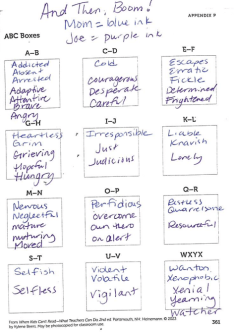
In her book, When Kids Can’t Read What Teachers Can Do, Kylene Beers introduces several strategies to support the exploration of character development, one of which is ABC Boxes. These ABC Boxes can be used as post-reading scaffolds, facilitating discussions on character growth throughout a story. Students who understand character development are better equipped to recognize themes, because character arcs often embody the central ideas and messages of a story. As characters face challenges, make decisions, and grow, their experiences and transformations illuminate the underlying themes. For instance, a character’s journey from isolation to connection can highlight themes of friendship and belonging. By analyzing how and why characters change, students can identify the broader messages the author is conveying.

ABC Boxes are a great way for supporting readers to notice and track how characters change. Students compare and contrast two characters by choosing words that describe the characters challenges, choices, experiences and transformations using different colored ink for each character. Beers illustrates this concept using an example from Lisa Fipps’s novel in verse, “Starfish,” where a student employed ABC Boxes to compare and contrast character development of two characters. Additionally, I used the blank template provided in the Appendices to complete my own comparative analysis of two characters from Fipps’s latest work, “And Then, Boom!”


Try this tomorrow!

TRY THIS TOMORROW: MEANINGFUL FLUENCY PRACTICE, ONE OF LINDSAY KEMENY’S 7 MIGHTY MOVES

Feb
01

7 Mighty Moves: Research-Backed, Classroom-Tested Strategies for K-to-3 Reading Success by Lindsay Kemeny, is a treasure trove of actionable strategies educators can try tomorrow. While Kemeny’s focus is on critical foundational reading skills for K-3, many of these strategies extend beyond grade 3. 7 Mighty Moves helps educators to think about how they can effectively address all the strands in the reading rope across the day. Kemeny shares her ongoing learning journey, revealing the adaptations she has made and the practices she has abandoned in a clear and engaging manner.

Within Move 6: Focus on Meaningful Fluency Practice, many of Kemeny’s strategies are adaptable for adolescent readers. She challenges educators to incorporate the practice of repeated oral readings combined with listening to fluent reading. Notably, Kemeny emphasizes the impact of reading a passage four times, stressing it has a greater impact than reading it only once, twice, or thrice. Techniques like echo reading, choral reading, and partner reading are highlighted as engaging methods that afford readers ample opportunities to both listen to and practice fluent reading. Kemeny emphasizes steering clear of ineffective practices such as round robin or popcorn reading, underscoring the importance of respecting readers’ emotional experiences while reading aloud.

I love that Kemeny included one of the most authentic oral rereading strategies that all readers may enjoy, regardless of age, the performance of a text for an audience. Various types of text can be adapted for Readers Theater: poems, dramatic dialogues, short stories, fables, folklore, and humorous texts with multiple voices, graphic novels, and comics, etc., as these are all great opportunities for repeated reading practice. Picture books and children’s literature featuring engaging dialogue are also recommended, provided they serve the readers’ individual needs.

Check out this group of adolescent readers performing The True Story of the 3 Little Pigs as well as this great collection of Readers Theatre scripts: RTscripts – Dr. Chase Young (thebestclass.org).

Kemeny challenges educators to implement different ways readers can engage in reading aloud in safe reading environments. What meaningful fluency practice strategies are you currently implementing in your classroom?

Kemeny, L., & Archer, A. L. (2023). 7 mighty moves: Research-backed, classroom-tested strategies to ensure K-to-3 reading success. Scholastic.

TRY THIS TOMORROW: ONE BOOK, MANY WAYS

Nov
09

TRY THIS TOMORROW: One Book, Many Ways

Mathematizing Children’s Literature: Sparking Connections, Joy and Wonder Through Read Alouds and Discussions written by Allison Hintz and Anthony T. Smith challenges educators to explore a “story several times from different perspectives and do so with the goal of listening to and honoring children’s thoughts and ideas”. They implore that we “lead with beautiful and interesting stories and use those stories as context for inviting learners to think as mathematicians.” (Hinz & Smith, 2022, p.4). They challenge educators to think about approaching stories with a mathematical lens and creating a space for learners to share their noticings and wonderings in ways that cultivate thinking and talk, sparking curiosity, joy, and wonder.

I was inspired to extend that to approaching stories with many lenses: as artists, composers, scientists, citizens, inventors, explorers, readers, and writers. Hinz & Smith (2022) disrupted my thinking around collecting stories with a math theme, or an art theme but looking at illustrations and words within texts as a focus for investigation.

  • How can one book be used in many ways across learning areas and layered across curriculum?
  • How can we return to the same picture book or the same text in different ways?
  • How can we use read alouds in a Middle or High School math or science class to springboard thinking and discussion?
  • How can we help our readers approach stories with curiosity and wonder?

The watch and wonder theme in the picture book, one boy watching, written and illustrated by Grant Snider is the perfect book to practice this idea. Snider beautifully illustrates a boy’s journey to school and all that a student riding the bus might see, hear, and feel.
Perfect for all ages, Snider will have you reminiscing about your own school bus journey of days gone by. Snider’s illustrations, short text and watch and wonder theme makes this a perfect book for returning to a read aloud repeatedly to focus on or investigate a feature of the story through many lenses.

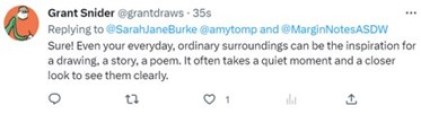
We asked author Grant Snider for some words of wisdom for educators who share his book with their students and his response echoes Hinz & Smith’s theme in their book: that inspiration for thinking can come from anywhere if we take the time to practice curiosity.

I wonder how can we explore our current collection of read alouds with a learning areas lens and think about how one illustration, one sentence or one beautifully written paragraph can be used across the learnings areas?


Hintz, A., & Smith, A. T. (2023). Mathematizing children’s literature: Sparking connections, joy, and wonder through read-alouds and discussion. Hawker Brownlow Education.

Snider, G. (2022). one boy watching. Chronicle Books.


ODDER BY KATHERINE APPLEGATE

Oct
24

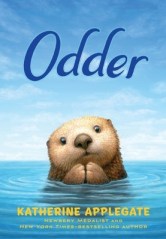
My first interaction with the book Odder by Katherine Applegate (author of The One and Only Ivan) and illustrated by Charles Santoso, was listening to the audio version – the sweet voice of Otter 156 telling her story. This little otter will capture your heart and immerse you in a story about identity, friendship, family, loss, courage, rescue and rehabilitation and conservation. Odder is inspired by the work of The Sea Otter Program at the Monterey Bay Aquarium that works to protect and conserve sea otters and their habitats. Throughout the story we learn about sea otters’ charismatic and playful nature, swimming abilities, strong family ties, fascinating abilities to use tools in their habitats and the joyful but threatened lives they live. The emotional impact of the poetic form will help readers connect with Odder’s character and themes through a memorable experience. After my listening experience, I knew this was a book I had to get my hands on. Whether you listen to Odder or read the words, I promise you will fall in love with her story.

TRY THIS TOMORROW: THE GIFT OF STORY

May
25

John Schu primes readers with personal reflection of the books of their heart within the first few pages of his book, The Gift of Story: Exploring the Affective Side of the Reading Life. I love the following questions that Schu uses during his school visits where he shares his love of stories.  

“Is there a book that changed your life?  

Is there a book that feels like a best friend to you?  

Is there a book that you have read so many times that most of it is tattooed to your heart?  

Is there a book that everyone in this room should know about?  

Is there a book that calms you and helps you find your way back to joy? 

Is there a book that helped you understand yourself or a classmate better?  

Is there a book you wish you could give to everyone you meet?” (Schu, 2022, p. 2) 

Book love and joy is something we must sustain and sometimes reclaim throughout the year in our reading communities. These questions are a wonderful resource to add your toolbox for supporting your readers to reflect on their own book love. Sharing “the book of your heart” is a powerful way to exchange book love between your readers. Try it tomorrow!