Margin Notes

FROM RESEARCH TO THE CLASSROOM: READING MOTIVATION

Nov
27

It’s not just about skills: Adopting a motivation-informed approach to instruction with adolescents by Kristin Conradi Smith, Bong Gee Jang, and Tori J. Ostot (Journal of Adolescent & Adult Literacy, 2024)

“Motivation, literally rooted in the Latin word “movere” has to do with what moves us to do something. When we talk about reading motivation, thus, we’re really considering what compels or inclines a student to participate (or not participate) in the reading activity or task. Though some research suggests that adolescents can be profiled as being highly motivated, ambivalent, or having low motivation (Syal et al., 2024), other research suggests the relationship is less clear and more context dependent (Retelsdorf et al., 2024). In fact, it is important to consider the dynamic and context-dependent nature of motivation, rather than relying solely on static categories that might inadvertently lead to deficit-oriented perceptions of students.”

Summary

While motivation-informed approaches benefit all students, the authors center this article on recent research with a particular focus on adolescents who have had struggles with reading and on students from diverse cultural and linguistic backgrounds who have often been ignored in research. This research confirms that students who have struggled with reading tend to avoid reading and perceive it as too difficult. These perspectives are considered “undermining motivation.”

Situated expectancy value theory (SEVT) suggests that students are motivated by whether they expect to be successful with a task or activity and whether they value it. Situational aspects of reading motivation include the purpose for reading, reading locations, text genres, and text topics.

A variety of factors have been identified as fostering adolescent readers’ motivation; however, two aspects matter most when designing and delivering instruction and interventions for adolescents:

  1. Interest and Relevance
  • In a meta-analysis of over 39 motivation-related interventions, interest played the most important role in improving students’ intrinsic motivation and achievement.
  • When students are given choice in reading materials and those materials align with their interests and cultural backgrounds, they are more likely to engage with the text, resulting in higher comprehension and retention.
  • Students see the relevance of what they are reading when teachers select texts that reflect relatable topics and themes.
  • This is especially important for students who have been marginalized by conventional educational practices—the lack of culturally relevant texts leads to diminished engagement in reading and writing.
  1. Self-beliefs
  • Students’ self-efficacy (their estimation of whether they can complete a task) and their perceptions of difficulty (whether they believe the task at hand will be too difficult for them) play a substantial role in motivation.
  • Teachers can address students’ self-beliefs by:
    • ensuring students feel confident they can access text
    • incorporating goal-setting strategies so students know expectations
    • providing positive and specific feedback

Takeaways For the Classroom

The authors identify four key principles for teachers to keep in mind when working with adolescent learners:

  1. Adopt an assets-based approach to classwork and assignments.
  • An assets-based approach means recognizing and valuing students’ diverse identities and funds of knowledge.
  • Teachers should make it a priority to recognize students’ strengths and potentials and design classroom activities and assignments to create opportunities for success and confidence-building.
  • Emphasizing the importance of developing and applying their strengths fosters a growth mindset in students, which increases engagement, perseverance, and academic achievement.
  • In an intervention setting, rather than starting the lesson with a focus on what students don’t know, approach it instead by highlighting previous skills mastered and connect what students already know to the new learning.


  1. Acknowledge the role of self-efficacy.
  • Self-efficacy is a student’s judgement about whether they will be successful with a given task. This expectancy is a major factor in students’ motivation.
  • Breaking assignments into concrete steps and providing actionable directions means that students can experience small successes along the way.
  • This is further supported by providing growth-oriented and specific feedback.
  1. Ground learning in meaningful texts and tasks.
  • Organizing text sets around themes or issues that are important to readers encourages them to make text-to-text and text-to-self connections, which increases engagement.
  • Incorporating an element of choice related to the tasks students will participate in during and after reading allows students to select tasks that are meaningful or interesting to them.
  1. Capitalize on opportunities for language use.
  • Relationships influence students’ motivation for engaging with reading.
  • Adolescents in particular are motivated when they work with each other.
  • Participation in book clubs has been shown to increase engagement and reading comprehension.

Conclusion

“As we consider working with adolescents who still need work on foundational skills, we would do them a particular disservice if we ignored the key roles that motivation will play in facilitating that learning.”

GUEST WRITER JUSTIN HACKETT RECOMMENDS THE FIRST STATE OF BEING

Nov
25

In The First State of Being by Erin Entrada Kelly, young Michael Rosario’s life is turned upside down when a stranger shows up outside his apartment complex and claims to be a time traveler. The story follows Michael, who is going into Grade 7, his babysitter Gibby, and Ridge, the time traveler, as they show Ridge around 1999 and try to get him back in a race against time.
This book explores a multitude of essential themes while posing numerous thought-provoking questions, compelling readers to think deeply. The story explores themes of poverty, grief, and the weight of overthinking and living in the future. Because Michael is so young, he often does not fully understand what is happening around him. Still, his innocence highlights how challenging it can be for children to navigate the complexities of life when adult themes emerge in their lives.

The questions this book raises provide ample opportunities for in-class discussions as well. Many questions arise in passing, such as: Is scientific advancement worth it if it poses a risk to humanity? Can there be danger in books and knowledge? And how much do we think our actions affect the future? With the book set in both 1999 and 2199, the technology in the future setting often appears to be advancements on our modern tech, showcasing how far we have come since 1999 and what is still possible in the future. This book is overall very thought-provoking while remaining relatable to many students, as they can look back and see their past and or current selves in any of the three characters.

Justin Hackett is a Bachelor of Education student at UNB and plans on teaching English and History at the high school level. He enjoys sports, the outdoors, and puzzles.

TRY THIS TOMORROW: CONNOTATION IN CONTEXT

Nov
20

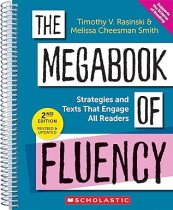
The revised and updated second edition of The Megabook of Fluency: Strategies and Texts That Engage All Readers by Timothy V. Rasinski and Melissa Cheesman Smith shares a fun strategy for emphasizing word meaning in their chapter on Teaching Expressive Fluency: It’s All in How You Say It! –an activity called Connotation in Context. This fun lesson helps students deepen their understanding of the undertones in words. Choose 6–8 words with clear positive or negative connotations and have students decide the connotation of each. Then, ask them to write a sentence that uses the word in a way that makes the connotation clear through context. Model how the same word can take on different tones depending on its use. She’s ambitious can sound admirable or critical depending on context and delivery. Students then read their sentences aloud, using tone and expression to match the connotation. If you have a copy of the book, use the Positive or Negative Connotations in Context printables that scaffold the activity.

Before diving into this lesson, explore the word connotation and preteach its morphology (con- meaning “with” and notare meaning “to mark”) as well as use sentences from a collection of mentor texts to show how writers choose words for nuance and subtle meaning. Students use connotations every day, often without realizing it. Invite students to discuss and think about words they use with different connotations (like “lit,” “goat,” or “sus”) to spark discussion of how language shapes social interactions. Have students make a list of words they often use that could have different connotations depending on context and discuss how those words change in meaning based on the situation. For more fluency-building ideas that also connect to craft like this strategy, check out The Megabook of Fluency 2nd Edition.


GUEST WRITER ELLEN HUNTER RECOMMENDS WHEN WE WERE MONSTERS BY JENNIFER NIVEN

Nov
18

“Be careful when you fight monsters so you don’t become one yourself.” (Niven)

Jennifer Niven’s When We Were Monsters is a novel of suspicion and suspense that follows Effy and Arlo’s twisted month-long creative writing program. Tucked away on the Move estate of their New England boarding school’s founder who died tragically years before, eight students have been hand-picked to spend their Jan term learning the art of tall tales with the world-renowned author, actor, and director, Meredith Graffam. Jan term can be a life-changing experience that could catapult Effy and Arlo into their writing dreams; however, they need to make it through Graffam’s eccentric methods that will either free or break them. With students dropping like flies, tensions rise and lies float through the estate’s walls. One can never know who to trust. When everyone in the house is being pitted against each other, how can you stop them from turning their vengeance toward the cause, Graffam herself?

Through Niven’s creation of a twisted estate cut off from the outside world due to January storms and lack of cell service, she has made the perfect backdrop for her twisted tale of dark academia. However, the story contains mature content of off-page death, murder, and substance use. Throughout this slow-burning psychological thriller, we see the characters grapple with themes of trauma, ambition, identity, and fear. Seeing the characters that Niven has created wrestling with themselves, their peers, and their supposed teacher at times can be heavy, but it also makes the book hard to put down. Though the setting may not be anything students will experience, the broad topics of personal conflict within the book can connect with the reader.

Ellen Hunter is currently working on her second degree at UNB to become an English teacher. She was born and raised on the north side of Fredericton. When she is not curled up with a good book, she volunteers dog walking, watches true crime documentaries, and spends time with her family.

TRY THIS TOMORROW: THERMOMETER CHECKS

Nov
13

This idea comes from the resource 100% Engagement: 33 Lessons to Promote Participation, Beat Boredom, and Deepen Learning in the ELA Classroom by Brian Sztabnik and Susan Barber. The goal is to spark authentic engagement, thoughtful discussion, and meaningful collaboration that deepen students’ reading, writing, and thinking skills.

Thermometer Checks, inspired by Tim Averill, invites students to track a character’s emotional state over time by literally plotting a temperature check graph. This allows students to visualize character development and connect textual evidence to these shifts.

Here are some images of what that might look like:


Here is how it works:

  • Set up the axes: The x-axis moves chronologically through the story or section; the y-axis represents the character’s mental health or emotional well-being.
  • Gather evidence: As students read in groups, they collect textual evidence (on sticky notes, annotations, or a shared document) highlighting key moments that reveal the character’s mindset.
  • Plot and justify: Students plot data points showing where they think the character “is” emotionally at various moments. Each point must be supported with a direct quote or paraphrased textual evidence.
  • Analyze and discuss: Once the graph is complete, students step back to interpret patterns. Where do emotions spike or drop? What causes these shifts? How do they shape the character’s motivations, choices, or relationships?

The goal is to have students increase awareness of how characters change and grow while using inferring skills to see the subtleties that are not stated outright. The lesson ends with a description of the engagement and says this:

This lesson engages students because they visually notice that the progression isn’t so direct. Characters, like us, fluctuate all the time. They respond and react to the events of life in positive and negative ways. It is a great way to get every student to see characters beyond their superficial facades and allow them to plunge into the depths of those characters’ complexity.

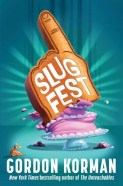
GUEST WRITER MELISSA FULTON RECOMMENDS SLUGFEST BY GORDON KORMA

Nov
10

Slugfest is a funny and heartwarming middle grade novel that blends sports, school drama, and the ups and downs of friendship.

The novel focuses on Yash, a middle school sports legend. He’s such a standout athlete that he’s been excused from 8th grade PE to play on the high school JV teams—and next year’s quarterback spot is basically his. Everything is going perfectly… until a new district rule is announced: no PE credit, no middle school graduation!

Now Yash is sentenced to Slugfest, a.k.a. PE summer school, alongside the “slugs” – the kids who trip over their own shoelaces. Mortified to be one of them, Yash is counting down the days until Slugfest is over. But things go from bad to worse when the class learns their teacher might not even be qualified to teach PE, jeopardizing their graduation. But, as the summer unfolds, Yash starts to realize that maybe the slugs aren’t so hopeless after all, and that being a real team means more than just winning.

Slugfest delivers plenty of relatable moments, whether you’re a sports superstar or can’t catch a ball to save your life. Korman blends humour with genuine heart as we watch unlikely friendships form. This book invites the reader to look beyond the flaws of others and recognize the strengths that make them shine.

“… I see that sports aren’t just for naturals like Yash and Nate. You may not always win, but when you fight hard, and want it with all your heart, regular nobodies—even slugs—can really surprise themselves.”

Melissa Fulton is a teacher candidate at the University of New Brunswick and avid reader of books for all ages. Besides reading, Melissa enjoys swing dancing, spending time in nature, and cheering on her own young sports star from the sidelines.

TRY THIS TOMORROW: SCAFFOLDED WRITING SPRINTS

Nov
06

This suggestion is inspired by The 1-Minute Writer: 396 Microprompts to Spark Creativity and Recharge Your Writing by Leigh Medeiros, a resource designed to offer writers four different timed prompts based on the same idea: 1 minute, 5 minutes, 10 minutes, and 20 minutes. In order to support a daily writing habit, writers can select the prompt that works best for the writing time they have available that day, so that they generate at least one minute’s worth of writing.

When I read the 1-Minute Writer, I loved the idea of having prompts that vary in complexity to give students the opportunity to take multiple laps around the track as they respond to a prompt, consider a topic, or grow their thinking as they see where their writing takes them. I can see this working in two ways:

  • Ask students to engage with a topic (a quickwrite invitation, a writing prompt, a text to write beside, a flashdraft, etc.) in four timed sprints beginning with I minute and ending with 20 minutes. Use Natalie Golberg’s advice of keeping the pen moving in order to get any and all ideas on the page.
  • Instead of revisiting the same topic for each of the four writing sprints, give students a different, more complex prompt for each round of writing. This would work very well as a variation on the one-minute paper response format. Depending on the prompts you create, students can write a separate response to prompts or they can build onto their original writing and thinking by adding more detail with each prompt. I think this would work especially well as a response to reading, viewing, or discussing with the prompts encouraging students to think more deeply, from a different perspective, or to seek out more compelling support for their thinking.


GUEST WRITER HELENA BRIGHAM-GALE RECOMMENDS WAR GAMES BY ALAN GRATZ

Nov
04

Bestselling middle-grade author Alan Gratz has created another highly engaging and historically detailed novel. Unlike Allies and Projekt 1065 set during the conflict of World War II, his latest novel War Games takes place in the lead up to the war. Set during the 1936 Berlin Olympics, protagonist Evie Harris witnesses the rise of Nazism and how it impacts the people around her.

13-year-old Evie can’t believe she made it onto the American gymnastics team and is determined to win a gold medal. As a refugee of the Dust Bowl, she dreams of bringing honour and financial stability back to her family. But whilst practicing for the qualifiers in Berlin, Evie is recruited for an even more challenging enterprise: joining a heist to rob the Nazi Reichsbank. As a young American girl, Evie hasn’t heard much about this new Nazi party in Germany. But as she undertakes high-stakes missions to prepare for the bank heist, Evie’s curiosity, empathy, and new acquaintances lead her to understand the dark truths behind the glitz of the Olympic Games.

Gratz carefully weaves character backstory and detailed historical events into a fast-paced heist narrative. The diverse cast of characters enables readers to see how the rise of Nazism affected different groups of people. As both a thrilling heist novel and a frank look at fascism, War Games strikes a timely, defiant, sometimes hopeful tone, and shows the power ordinary people can have when they refuse to stay silent in the face of injustice.

 Helena Brigham-Gale is an EAL teacher and is currently studying at the University of New Brunswick. In her free time, she enjoys hiking, reading, and trying to find the best cafés in every city she visits.